
Home / Closet Cases / Pantry Organization Ideas
Pantry · 7 min read15 Pantry Organization Ideas That Actually Last
A tidy pantry isn't about pretty jars for the first week — it's about a system that stays organized for years. Here are 15 ideas our designers use to build pantries that hold more and stay neat long after the labels go on.
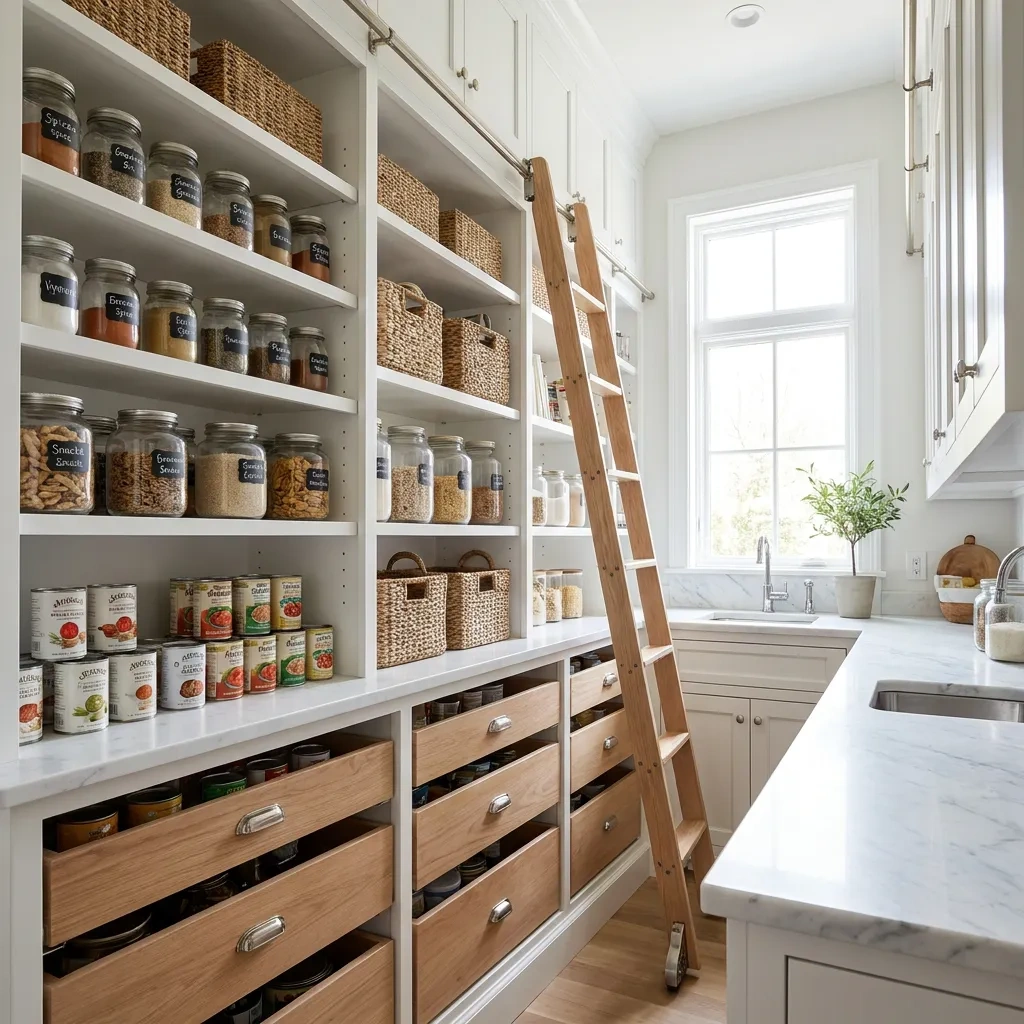
Most pantries fail for the same reason: they're a stack of deep, fixed shelves where food goes to disappear. The fix is a system designed around how you actually shop and cook. Start with these 15 ideas.
Plan your pantry in zones
- 1. Empty it and edit first. Pull everything out, toss expired items, and you'll instantly see how much space you really need.
- 2. Group into zones. Baking, breakfast, snacks, canned goods, beverages. Like-with-like means you always know where things go back.
- 3. Store by frequency and weight. Everyday items at eye level, heavy items (flour, canned goods) down low, and light or rarely used items up top.
- 4. Create a "kids' zone." A low, reachable shelf or basket for snacks keeps little hands out of everything else.
Choose shelving that works harder
- 5. Use adjustable shelves. Fixed spacing wastes vertical room. Adjustable shelving lets you make tall sections for cereal and short ones for cans.
- 6. Keep shelves 12–16 inches deep. Deeper than that and food vanishes at the back. The right depth keeps everything visible.
- 7. Add pull-out drawers for deep items. Roll-out drawers bring cans, jars and bulk items to you — no more archaeology at the back of the shelf.
- 8. Go floor to ceiling. A custom system uses the full wall height, with a step stool or rolling ladder for the top tier. That top 18 inches is prime overflow storage.
The secret to a pantry that stays organized is simple: a place for everything, sized to what you actually buy.
Contain and label everything
- 9. Decant dry goods into clear containers. Flour, rice, pasta and cereal in matching clear bins look great and tell you at a glance when you're running low.
- 10. Use baskets for the "messy" categories. Chip bags, produce and odd-shaped items live happily in woven or wire baskets that pull out like drawers.
- 11. Add a lazy Susan for bottles & oils. A turntable in the corner makes condiments and cooking oils a quick spin away.
- 12. Label by zone, not by item. Broad labels ("Baking," "Snacks") survive real life better than a label for every single jar.
Finishing touches that keep it tidy
- 13. Light it up. LED strips or a motion-sensor light turn a dark pantry into one where you can actually find things.
- 14. Build in a drop zone or counter. A small landing surface for unloading groceries makes restocking effortless.
- 15. Leave room to grow. Design in 10–15% of empty space so a big shopping trip doesn't blow up the whole system.
Why a custom pantry beats off-the-shelf bins
Store-bought organizers help, but they're working against a poorly designed space. A custom pantry system is built to your walls, your ceiling height and your habits — adjustable shelves, pull-out drawers and zones that fit your real groceries. The result holds far more and, because everything has a home, it stays organized.
Custom pantries typically run $1,500–$5,000 installed — see our full custom closet & pantry cost guide for what drives the price. The same craftsmanship applies whether we're building your pantry, closet or laundry room.
Ready for a pantry that stays this nice?
Bring us your space and we'll design a pantry around the way you really cook and shop. Your in-home design consultation is free, and you'll see the layout — and an honest price — before you commit.
Custom shelving and pull-outs built to your space. No pressure, ever.